Exporters in India can claim different benefits when they send goods to other countries. Two common benefits are RoDTEP and Duty Drawback. Both help reduce export costs. However, they cover different duties and taxes.
Many exporters compare RoDTEP vs Duty Drawback to see which costs each scheme returns. They also want to know if they can claim both benefits for one shipment.
This blog explains how both schemes work. It also covers their rates, eligibility, benefits and claim rules.
Table of Contents
- What Is RoDTEP and Duty Drawback?
- RoDTEP vs Duty Drawback: Key Differences
- RoDTEP and Duty Drawback Rates
- Eligibility for RoDTEP and Duty Drawback
- Can We Claim Both RoDTEP and Duty Drawback?
- Documents Required for RoDTEP and Duty Drawback
- Benefits of RoDTEP and Duty Drawback for Exporters
- How Can Exporters Avoid Common Claim Errors?
- Conclusion
- Frequently Asked Questions
- What Is the Difference Between RoDTEP and Duty Drawback?
- Can We Claim Both RoDTEP and Duty Drawback?
- What Is the Difference Between RoDTEP and Drawback Rates?
- Is RoDTEP the Same as Duty Drawback?
- How Do Exporters Receive RoDTEP Benefits?
- How Do Exporters Receive Duty Drawback?
- Is the RoDTEP Scheme Available in 2026?
- Which Is Better: RoDTEP or Duty Drawback?
What Is RoDTEP and Duty Drawback?
RoDTEP and Duty Drawback are government schemes for exporters. Both help lower the cost of exported goods. However, each scheme covers different costs.
What Is the RoDTEP Scheme?
RoDTEP stands for Remission of Duties and Taxes on Exported Products. The government started this scheme on 1 January 2021.
Its main aim is to refund taxes that exporters cannot claim through other schemes. These may include state, central and local taxes. Such costs can remain part of the final product.
For example, an exporter may pay electricity duty or certain local taxes during production. If another scheme does not refund these costs, RoDTEP may cover them.
The government sets rates for eligible products. These rates depend on the product’s HS code and FOB value. Some products also have a value cap.
Exporters receive the benefit as an electronic duty credit (e-scrip) through ICEGATE. They can use this credit to pay eligible Basic Customs Duty on imports. They can also transfer it to another eligible holder.
The government has extended RoDTEP Scheme till 31st December, 2026. The Scheme would cover eligible exports by DTA units, Advance Authorisation holders, SEZ units and EOUs in accordance with the provisions of the Scheme.
What Is the Duty Drawback Scheme?
Duty Drawback is another export benefit scheme. It helps exporters recover eligible customs and excise duties paid on inputs used for exported goods.
For example, a manufacturer may import raw materials and pay customs duty. The manufacturer then uses these materials to make goods for export. The exporter may claim eligible Duty Drawback on these goods under the scheme rules.
There are two main ways to claim this benefit:
- All Industry Rate (AIR): The government sets a standard rate for listed export products.
- Brand Rate: An exporter can apply for a special rate if the standard rate is not available or does not cover the eligible duties.
Once Customs approves the claim, the amount goes to the exporter’s registered bank account.
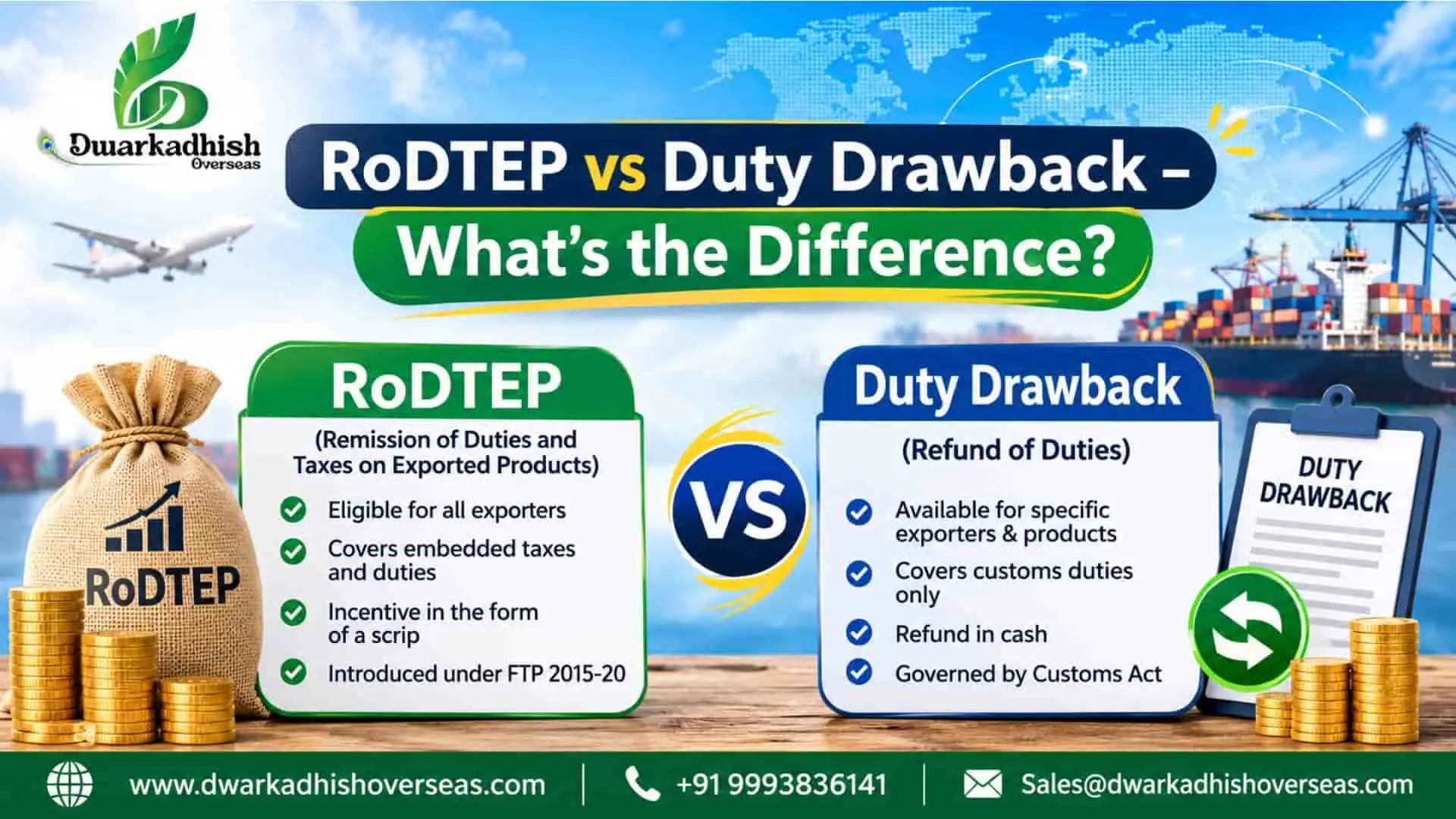
RoDTEP vs Duty Drawback: Key Differences
Both schemes support exporters. However, their coverage, rates and payment methods are different.
| Basis | RoDTEP | Duty Drawback |
| Full form | Remission of Duties and Taxes on Exported Products | Duty Drawback |
| Main purpose | Refunds eligible unrebated taxes | Refunds eligible duties on inputs |
| Started | 1 January 2021 | Older export benefit scheme |
| Rate basis | Notified rates and value caps | AIR or approved Brand Rate |
| Payment method | Electronic duty credit e-scrip | Bank credit |
| Main coverage | Eligible central, state and local taxes | Eligible customs and excise duties |
| Claim method | Declaration in shipping bill | Claim through shipping bill |
| Portal | ICEGATE | ICEGATE |
The key difference between RoDTEP and Duty Drawback is the cost that can be reclaimed. RoDTEP covers allowable taxes left unreclaimed. Whereas Duty Drawback covers allowable duties paid on inputs.
RoDTEP and Duty Drawback Rates
Rates are useful to exporters to compare the two schemes. There is no one rate to cover all products.
RoDTEP Rates
RoDTEP rates depend on the HS code of the exported product. The government lists these rates in Appendix 4R and Appendix 4RE.
The benefit is usually a percentage of the FOB value. Some products also have a fixed value cap per unit.
Exporters should check the latest rate list before calculating their benefits.
Duty Drawback Rates
Duty Drawback rates depend on the product and the duties covered under the scheme.
The AIR schedule gives standard rates for eligible products. Exporters can also apply for a Brand Rate if the standard rate is not available or does not cover the eligible duties.
Exporters should check the latest CBIC Duty Drawback Schedule before filing a claim.
Eligibility for RoDTEP and Duty Drawback
Exporters must meet certain rules to claim these benefits. Eligibility depends on the product, HS code and government rules.
RoDTEP Eligibility
Before claiming RoDTEP, exporters should check these points:
- The product must be listed in the notified RoDTEP rate schedule.
- The product must meet the scheme rules.
- The exporter must declare RoDTEP in the shipping bill.
- The export must meet government conditions.
Duty Drawback Eligibility
Exporters must follow the Customs and Central Excise Duties Drawback Rules to claim this benefit.
They should check these points:
- The exported goods must qualify under the drawback rules.
- The product must have a valid drawback rate or approved Brand Rate.
- The exporter must claim Duty Drawback in the shipping bill.
- The exporter must keep the required records and documents.
Can We Claim Both RoDTEP and Duty Drawback?
Yes, exporters can generally apply for RoDTEP and Duty Drawback on the same export consignment. However, there are specific rules that will need to be followed for each.
Exporters will not receive a double refund for paying the same duty or tax.
For example, an exporter may claim Duty Drawback on eligible duties paid on inputs. The exporter may also claim RoDTEP for other eligible taxes that remain unrefunded.
Before claiming both benefits, exporters should:
- Check the HS code and product eligibility.
- Review the latest rates under both schemes.
- Make the correct declarations in the shipping bill.
- Check whether another scheme has refunded the same duty or tax.
- Keep the required export and payment records.
Can Drawback and RoDTEP Be Claimed Together on One Shipping Bill?
Yes. Eligible exporters can use the same shipping bill for both the schemes. However, customs will consider the claim according to their rules.
The exporter has to make the necessary declaration and in case there is a discrepancy it could affect the claim.
Documents Required for RoDTEP and Duty Drawback
Before filing a claim, the exporters should keep all the required documents ready. The documents may vary based on the product and type of claim.
Some common documents include:
- Shipping bill: Contains export details and benefit declarations.
- Commercial invoice: Shows product and shipment details.
- Packing list: Lists the goods included in the shipment.
- Import records: Show input details and duty paid, where required.
- Bank details: Must be registered with Customs.
- Supporting records: May be needed when applying for a Brand Rate.
Benefits of RoDTEP and Duty Drawback for Exporters
Both schemes help exporters manage costs. They also support Indian goods in global markets.
Benefits of RoDTEP
- Helps recover eligible taxes that remain part of export costs.
- Provides transferable electronic duty credit.
- Helps lower the cost of exported goods.
- Covers eligible products across different sectors.
Benefits of Duty Drawback
- Helps recover eligible duties paid on inputs.
- Sends approved payments to the exporter’s bank account.
- Offers standard rates for many export products.
- Allows exporters to apply for a Brand Rate where applicable.
How Can Exporters Avoid Common Claim Errors?
A small mistake can delay an export benefit. Exporters should check their records before filing a shipping bill.
Here are some common errors to avoid:
- Wrong HS code: An incorrect code can affect product eligibility and rates.
- Missing declaration: The exporter may miss a chance to claim a benefit.
- Wrong rate: An old rate can lead to an incorrect claim.
- Duplicate claims: The same duty or tax cannot be refunded twice.
- Wrong bank details: Incorrect details can delay Duty Drawback payments.
Exporters should also check their claim status on ICEGATE. This helps them find pending claims and follow up on issues.
Conclusion
RoDTEP and Duty Drawback both help Indian exporters lower their export costs. However, they cover different duties and taxes. RoDTEP refunds eligible unrebated taxes, while Duty Drawback covers eligible duties paid on inputs.
Exporters can avail benefits from both schemes if their products are eligible under each scheme, but not both for the same duty or tax.
Before filing the claim for rebates under these schemes, it is important to check HS Code and the most recent rates.
Frequently Asked Questions
1. What Is the Difference Between RoDTEP and Duty Drawback?
RoDTEP refunds eligible unrebated taxes on exported goods. Duty Drawback refunds eligible customs and excise duties paid on inputs. Both schemes help reduce export costs.
2. Can We Claim Both RoDTEP and Duty Drawback?
Yes, exporters can generally claim both benefits if they meet the scheme rules. However, they cannot claim a refund twice for the same duty or tax.
3. What Is the Difference Between RoDTEP and Drawback Rates?
RoDTEP rates depend on the product’s HS code, FOB value and value cap. Duty Drawback rates depend on the notified AIR or approved Brand Rate.
4. Is RoDTEP the Same as Duty Drawback?
No. Both are different export benefit schemes. They cover different duties and taxes and follow separate rules.
5. How Do Exporters Receive RoDTEP Benefits?
Exporters receive RoDTEP benefits as electronic duty credit e-scrips through ICEGATE. They can use these credits to pay eligible Basic Customs Duty or transfer them as per the rules.
6. How Do Exporters Receive Duty Drawback?
After Customs approves the claim, the eligible amount goes to the exporter’s registered bank account.
7. Is the RoDTEP Scheme Available in 2026?
Yes. The government has extended the RoDTEP scheme until 31 December 2026. Eligible exporters can claim benefits under the current rules.
8. Which Is Better: RoDTEP or Duty Drawback?
Both schemes offer different benefits. RoDTEP covers eligible unrefunded taxes, while Duty Drawback refunds eligible duties on inputs. The right benefit depends on the export product and scheme rules.